HL-P reactor
The HL-P reactor serves research on the pretreatment of lignocellulosic biomass. The solution uses the action of temperature and pressure changes to prepare the raw material for further biological processing.
The HL-P concept includes high- and low-pressure zones and makes it possible to compare microwave and conventional heating. The ongoing research makes it possible to assess the effect of pretreatment conditions on the properties of the biomass and its suitability for biofuel production.
How the reactor works
This animated cutaway follows biomass through the HL-P reactor: from feeding, through heating in the high-pressure chamber and decompression, to the low-pressure tank and assessing the feedstock in fermentation.

Stage 1 of 6Feeding. Lignocellulosic biomass goes through the hopper and valve into the vessel in the high-pressure chamber.
Click a part to see what it does · Reactor parts (11)
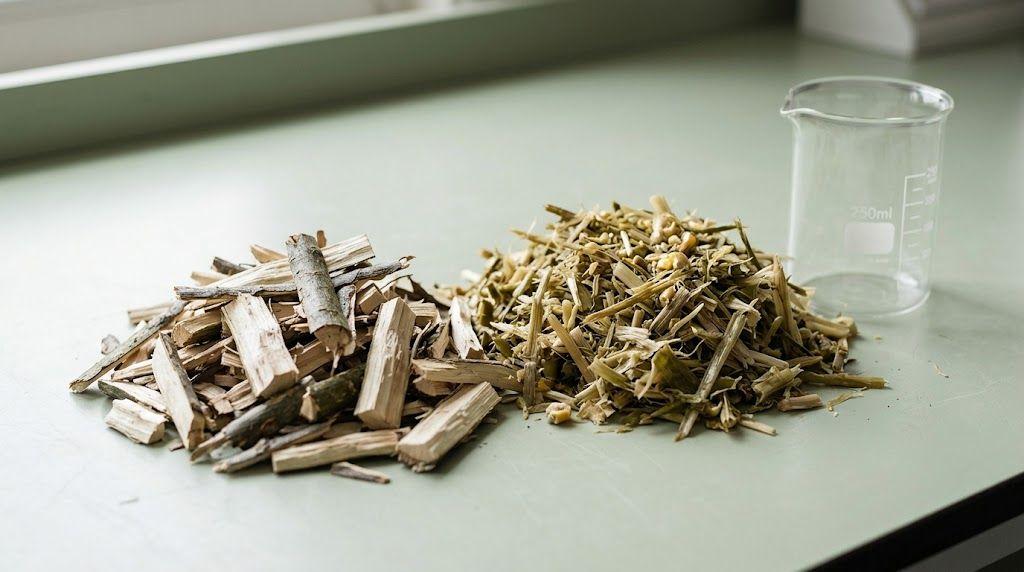
Biomass, willow chips and maize silage, enters the vessel in the high-pressure chamber through a hopper with a valve. There it is stirred and heated by microwaves or by a heating element. When heating stops, a set time counts down; then the drain valve opens briefly, the pressure drops suddenly and the charge falls into a much larger tank below. The pretreated feedstock is taken out in a container, and its suitability is assessed in methane and alcoholic fermentation.
Illustrative diagram. Shapes and proportions do not reflect the actual design.